P. M. Aronow Award
For Bravery in Statistics and the Social Sciences
The award goes to a scholar for producing high-quality theoretical, methodological or empirical work that defies expectations, displays honesty in presentation, and advances human knowledge.
2026 Aronow Award Citation
The P. M. Aronow Award received many worthy nominations. It was quite difficult to make a decision, but two candidates stood out as exceptional this year.
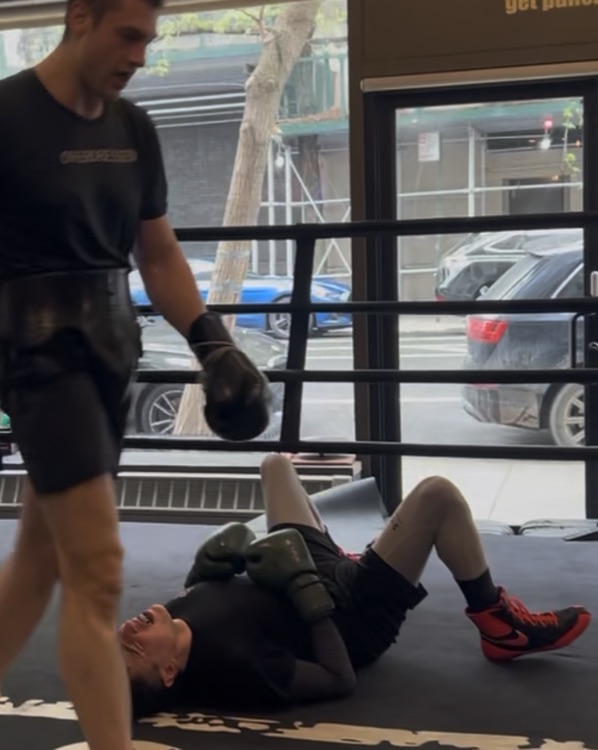
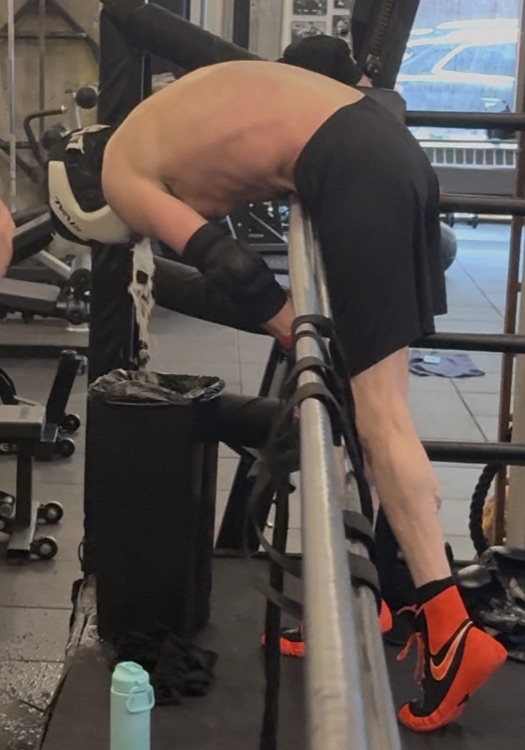
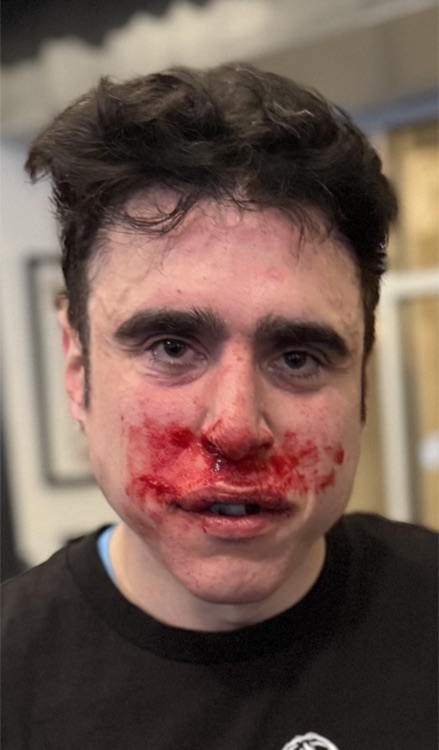
Following the subsequent announcement of a competing prize, we have increased our prize pool. Thanks to an anonymous sponsor, we are now able to offer $200 to each winner, in addition to a trophy and an offer of a three-round sparring session with Aronow.
The inaugural winners of the Aronow Award are:
Dean Knox of the University of Pennsylvania and Jonathan Mummolo of Princeton University
Knox and Mummolo (K&M) wrote a series of papers identifying serious statistical problems in influential studies of racial bias in policing. In one critique, they showed that a PNAS article based on fatal-shooting records could not support its claims about racial differences in the probability of being shot. The authors acknowledged this problem and subsequently retracted the article.
Most notably, in their article with Will Lowe (2020, APSR, henceforth KLM), they analyzed how conditioning on police stops can introduce “collider bias” into comparisons of the kind used by Fryer (2019, JPE). If police stop minority civilians at a lower threshold of suspicion, the resulting records can compare lower-suspicion minority encounters with higher-suspicion white encounters. Such comparisons can understate discrimination in the use of force, even among stopped civilians. KLM formalized this problem and developed bias corrections and bounds on racial effects. Related critiques were offered by other scholars, including Durlauf and Heckman (2020, JPE). K&M have engaged publicly on this matter in multiple fora, and have done tireless work in making sure that these statistical flaws did not go unnoticed.
In one exchange, KLM was challenged by a team of prominent statisticians (Gaebler, Cai, Basse, Shroff, Goel, and Hill), who claimed in an initial draft that KLM contained a mathematical error. While Gaebler et al. correctly identified an overstatement in KLM’s claims about which assumptions were necessary for identification, the committee views this as a semantic point not a substantive one. The committee believes that, if understood as a response to KLM’s argument about selection in policing data, Gaebler et al.’s rebuttal was essentially a non sequitur: the existence of assumptions that can justify a procedure does not establish that those assumptions are reasonable for the policing comparisons at issue.
Gaebler et al. proposed an approach that could justify comparisons of the kind used by Fryer under an assumption they called “subset ignorability.” Under KLM’s assumptions, subset ignorability requires that, after adjustment and holding perceived race fixed, stops caused by racial bias carry the same average underlying risk of force as stops that would have occurred anyway. KLM had already considered this restriction and argued that it was implausible: unrecorded suspicion or perceived threat can influence both stopping and force, making the two kinds of stops systematically different. In this setting, subset ignorability requires assuming that selection does not bias the comparison -- or, if treatment ignorability is relaxed, that the selection bias is exactly offset by omitted-variable bias. Put bluntly, the committee finds neither assumption credible nor even illuminating for the policing comparisons at issue.
K&M defended this substantive point forcefully, sometimes in unusually brash and harsh terms. Given the stakes, the committee believes a forceful public response was warranted. In the committee’s view, Andrew Gelman’s commentary on the matter muddied the issue: it framed the disagreement largely in terms of scope and offered platitudes that observational research generally relies on idealized assumptions. Although Gelman acknowledged selection concerns and published Knox’s response, these framings obscured KLM’s point that selection can compromise comparisons among stopped civilians. K&M were right to insist on that point.
K&M’s work also extends beyond critique. K&M have helped build and analyze new data (e.g., these papers) for studying police behavior and accountability, and they have published corrections to their own research when errors came to light. K&M have demonstrated a commitment to the highest ideals of academic research, and to the ethical obligations entailed by the pursuit of truth. It is not easy to publicly challenge prominent scholars on a politically charged question. K&M did so repeatedly, and their central contentions were correct.
Disclosures and disclaimers:
This citation was written with the assistance of large language models, which included suggesting arguments, contributing to drafting and revision, and verification of arguments.
The assessments of research and academic commentary in this citation reflect Aronow’s professional judgment as a scholar. The P. M. Aronow Award is privately funded and is offered by P. M. Aronow. The award committee consists of Aronow alone. Concerns or disagreements may be directed to the appeals committee.
Will Lowe shares fully in the credit for KLM. This award recognizes K&M’s broader body of work and their sustained public defense of it. The committee extends its admiration to Lowe, along with an offer of a sparring session.
(warning: images may be upsetting, and include depictions of violence and bodily fluids)